When the Vagus Nerve Meets the NICU
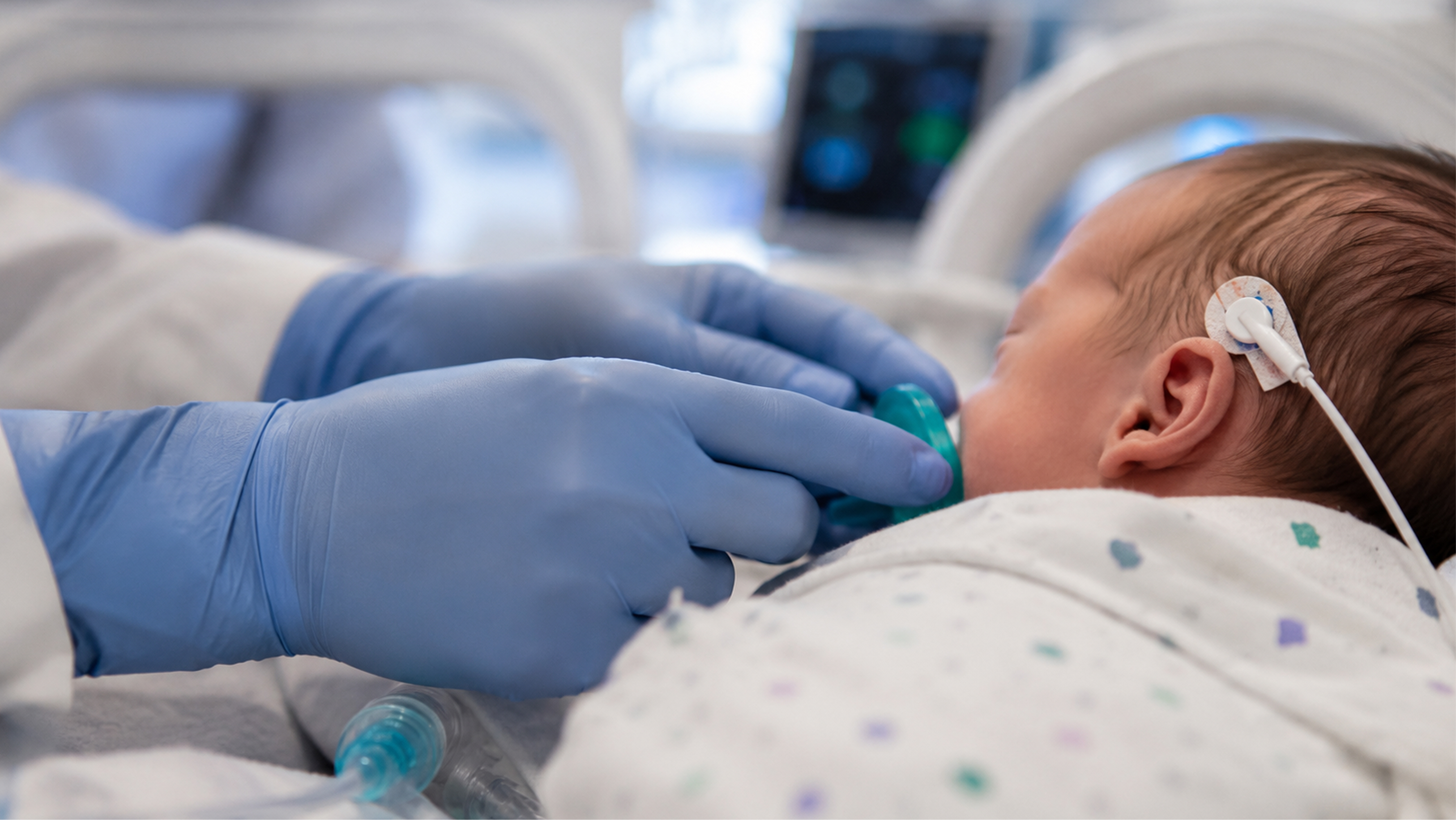
For infants born prematurely or with perinatal brain injury, learning to eat is not a given. Sucking and swallowing are extraordinarily complex sensorimotor skills, governed by intricate peripheral and central neural circuits that must develop and coordinate within a narrow developmental window. For the most severely affected infants — those whose dysfunction is so profound that oral feeding is restricted or prohibited entirely — there are currently no evidence-based rehabilitative options that directly target the underlying neural circuits. Most will leave the NICU with a gastrostomy tube and face years of feeding difficulties.
Dr. McGhee’s project tests a novel approach: pairing transcutaneous auricular vagus nerve stimulation (taVNS) with a structured oromotor training protocol in infants with severe dysphagia who cannot safely bottle feed. The hypothesis is that taVNS, when paired with progressive oral sensorimotor stimulation, can activate the vagal afferent pathways necessary to promote neuroplasticity in the feeding-related circuits during this critical developmental window — building the neural architecture for sucking and swallowing from the ground up, rather than waiting for spontaneous development that may never come. If successful, this could transform outcomes for one of the most underserved and understudied populations in neonatal medicine.