Timing the Brain to the Cycle
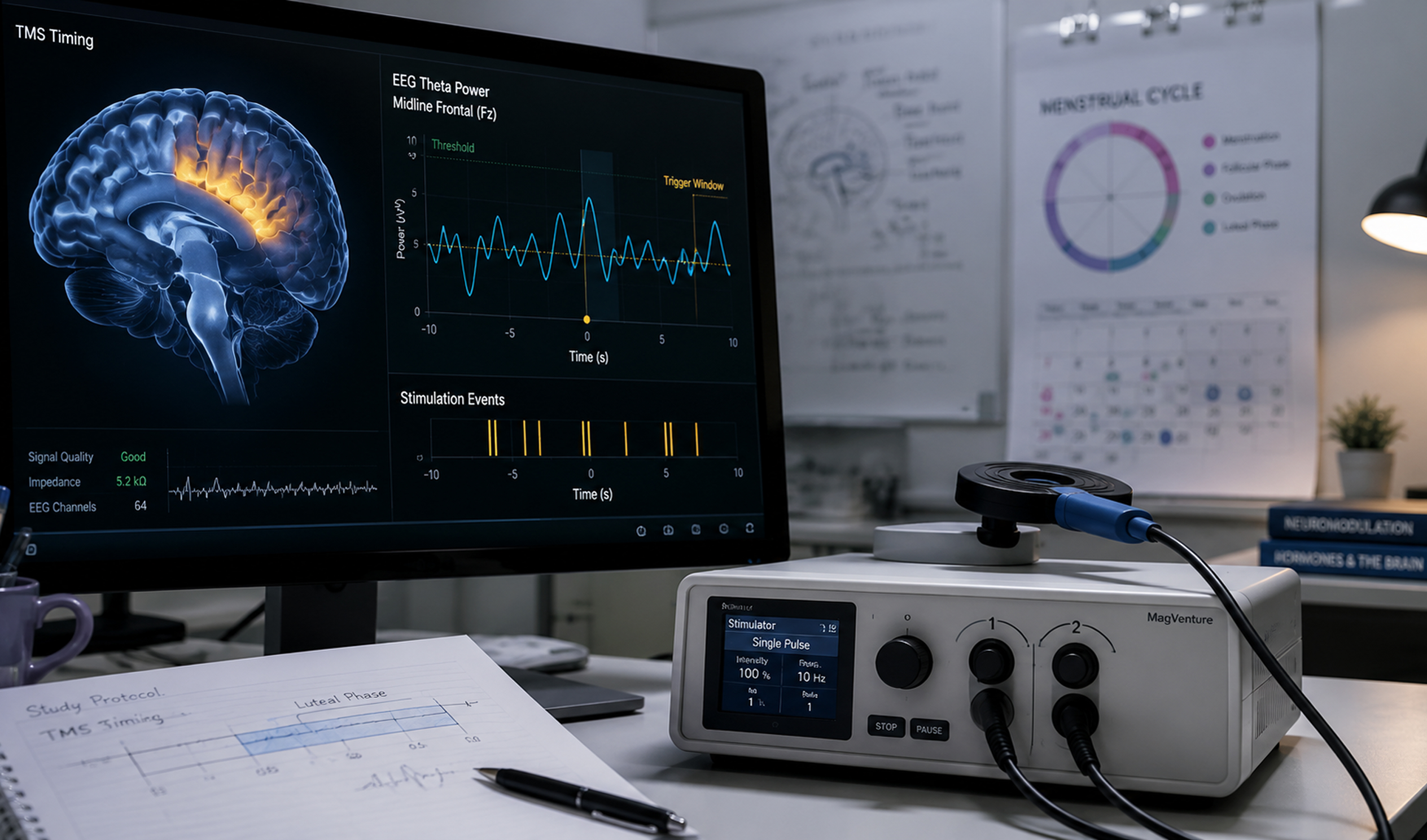
Neuropsychiatric conditions affecting women — including premenstrual dysphoric disorder, perimenopausal depression, and hormonally-linked mood dysregulation — have historically been underfunded and poorly understood mechanistically. A growing body of evidence suggests that fluctuating reproductive hormones, particularly estrogen and progesterone, exert significant effects on cortical excitability and neural plasticity, creating windows in the menstrual cycle when the brain may be differentially responsive to neuromodulation. Yet current TMS protocols for mood disorders are entirely blind to hormonal state, delivering stimulation on fixed schedules regardless of where a patient is in her cycle.
Dr. Ferraz’s project tests a neurohormone-interval-guided approach to TMS — one that aligns stimulation timing with specific phases of the menstrual cycle to exploit periods of heightened cortical plasticity. By mapping the relationship between cycle phase, hormonal markers, and TMS response in women with mood dysregulation, this study asks a foundational question that the field has largely ignored: does timing matter? If hormonal state systematically modulates TMS efficacy, the implications are substantial — not just for women’s mental health, but for a broader rethinking of how personalized neuromodulation should be designed.