Turning Up the Current on Depression
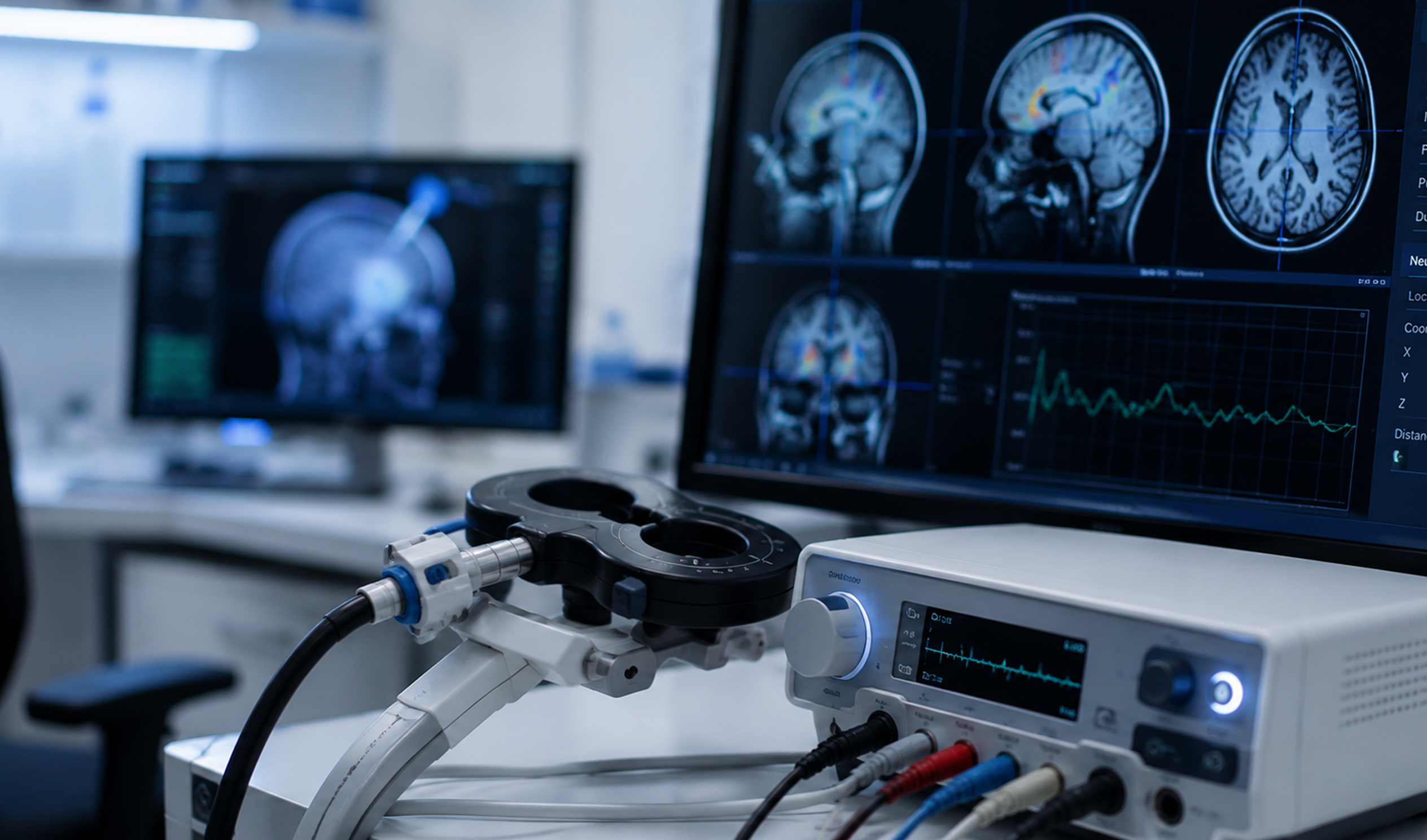
Transcranial direct current stimulation (tDCS) for depression has long been constrained by conservative dosing. Most clinical trials have capped stimulation at 1–2 mA, delivered once daily — a paradigm shaped in part by the limitations of older electrode technology that caused discomfort and skin irritation at higher intensities. The result has been modest and inconsistent efficacy across a body of otherwise promising research. Recent advances in electrode design have changed the equation: new high-capacity hydrogel electrodes now allow current delivery at 6 mA — triple the conventional dose — without the tolerability problems that historically made higher-intensity tDCS impractical.
Dr. Olash’s study is the first to systematically test accelerated high-dose tDCS at 6 mA in patients with major depressive disorder, delivered twice daily over five consecutive days in an outpatient brain stimulation laboratory. Drawing on the precedent set by accelerated TMS paradigms, which have demonstrated that compressing treatment schedules and increasing cumulative dose can produce rapid antidepressant effects, this proof-of-concept trial evaluates safety, tolerability, and feasibility while collecting preliminary outcome data on depressive symptoms, anhedonia, cognitive function, and — uniquely — individual electric field distribution via structural MRI modeling. If safe and tolerable, this work could redefine how tDCS is deployed as a scalable, nonpharmacologic intervention for the millions of patients for whom standard treatments are inadequate.